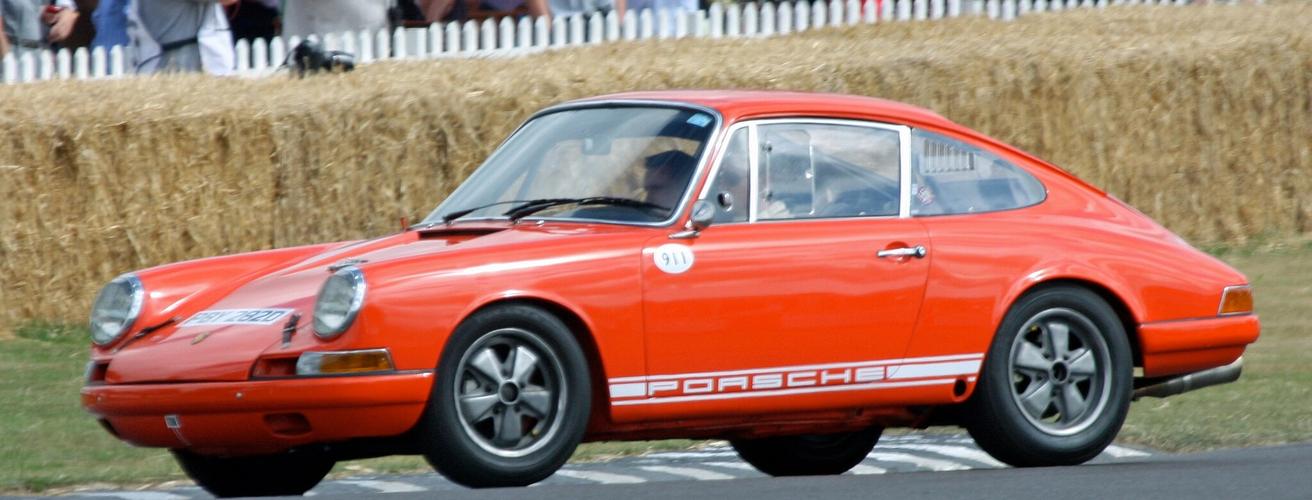
Porsche 911 (F-Body): The Original


Jamie Ong
The Shape That Made Porsche… Porsche
Built from 1964 through 1973, the original 911 - internally known as the F-series was Porsche deciding what it wanted to be. The F-body longhood 911 is when rare icons become reference points, an era where Porsche refined its identity through engineering clarity, lightweight thinking, and an unwavering focus on driver connection.
As the very origin of the 911 shape, the F body quietly established the blueprint that still guides every 911 today. Serious collectors understand this instinctively. The longhood is the origin story, the moment where philosophy turned into form.
The name itself comes from a defining design cue unique to this first generation. The front luggage lid extends long and low, curving gently downward to meet the slim chrome bumper rather than terminating in a flatter, more upright edge as seen on later impact-bumper cars. That elongated bonnet line - uninterrupted, delicate, and aerodynamically clean - gives the car its distinctive forward sweep and visual lightness.
Origins - When Engineering Led the Conversation
1963–1964: From 901 to 911
The story begins at the 1963 Frankfurt Motor Show, where Porsche unveiled the 901. Sleek. Rear-engined. Air-cooled. A clean break from the 356. Then came the naming dispute with Peugeot, and by 1964, the 901 became the 911. A new name for what would become the company’s defining architecture. Early cars carried a 2.0-litre flat-six producing around 130 horsepower. Modest numbers by today’s standards. But the balance, the rev-happy nature, the unmistakable silhouette, that was the breakthrough.
The early 911 arrived with proportions that felt daring yet purposeful: a long, tapering front, a compact cabin, and a flat-six positioned confidently at the rear. Each adjustment brought the car closer to the focused performance identity. Among enthusiasts who have lived with these cars, the longhood years represent a rare purity, a time when the brand’s philosophy remained guided primarily by mechanical intent.
1967: The 911S Changes the Game
Three years in, Porsche sharpened its intent. The 911S arrived in 1967 with 160 horsepower and Fuchs forged alloy wheels, a detail that would become sacred in enthusiast circles. Ventilated disc brakes. Higher compression. More cam. The “S” established a formula the brand still follows today: take the base car, strip hesitation, add precision.
1968–1969: Wheelbase Lessons & the 911E
Early short-wheelbase (SWB) cars, built from 1964 to 1968, were lively, sometimes too lively. The rear-engine layout demanded respect. In 1969, Porsche extended the wheelbase to improve high-speed stability. The change was subtle visually, transformative dynamically.

The lineup evolved with the 911T (Touring), the 911E (Einspritzung, fuel-injected), and the 911S. Three personalities. One architecture. Porsche was learning how to segment performance without diluting identity.

1970–1972: Bigger Displacement, Bigger Ambition
Engine capacity grew to 2.2 litres in 1970, then 2.4 litres by 1972.
Torque improved. Usability matured. The 911 was no longer an experiment, it was a refined weapon. 1972 also introduced one of the most collector-obsessed quirks in Porsche history: the external oil filler flap on the rear quarter panel. A one-year-only feature. Functional, confusing to petrol station attendants, and now deeply desirable.

1973: The Carrera RS 2.7 The Apex of the F-Body
Then came 1973. The Carrera RS 2.7 wasn’t the beginning of Porsche’s motorsport philosophy, but it was the moment everything crystallised. Lightweight panels. Ducktail spoiler. 2.7-litre engine producing 210 horsepower. Built for homologation. Revered for eternity. The RS marked the final, distilled expression of the F-body before US safety regulations ushered in the G-series impact-bumper cars in 1974. It was the last of the pure longhoods.
Driving Character: Precision as Participation
Slide behind the wheel of a longhood and the experience feels unfiltered. The steering speaks in fine detail. The flat-six gathers revs with mechanical honesty rather than brute force. Momentum builds through rhythm, not aggression.
This is a car that rewards fluency. Light weight, modest power, and balanced chassis geometry demand involvement. And in an era of assisted performance, that kind of mechanical dialogue has become increasingly rare and increasingly sought after.
Design: Proportion Before Posturing
The longhood silhouette remains one of the most disciplined shapes in automotive design. Narrow arches, slim pillars, and restrained brightwork create balance rather than drama.
Inside, clarity defines the space. Five clear gauges. Thin-rim steering wheel. Minimal distraction. It’s a cockpit built around information, not theatre.
Modern interpretations may be larger, louder, and more complex, but they still trace their proportions back to this original composition.
Collector Perspective - A Foundational Asset Finds Its Moment
For informed collectors, the longhood era represents Porsche’s developmental proving ground. Lightweight experimentation, early motorsport cross-pollination, and subtle mechanical revisions laid the groundwork for future RS and competition programs.
Market sentiment has evolved alongside collector awareness: early longhood 911s are increasingly recognised not just for their driving character, but for their foundational place in air-cooled Porsche history. Rather than being seen merely as early entries, these cars are valued for the role they play in the 911’s architectural evolution from chassis proportions to lightweight philosophy and for the direct link they maintain to Porsche’s motorsport roots.
Valuation insights from respected authorities like Hagerty reflect this shift. Interest in analog-era 911s with documented provenance and original specification remains strong relative to broader classic car categories, underscoring a sustained demand among collectors who prioritise mechanical authenticity alongside historical significance.
Rather than chasing short-term rarity, serious buyers are placing a premium on cars that tell a complete story: early longhood 911s with robust documentation, original trim, and period correctness are increasingly viewed as cornerstone assets within long-term collector portfolios. This nuanced demand, rooted in heritage, usability, and provenance, continues to inform how the most sought-after examples are valued in today’s market.
Why the F-Body Still Defines the Brand
The F-body era did something rare: it created a silhouette so correct that Porsche has never truly replaced it. Even modern 911s trace their roofline and stance back to 1964.
The F-series feels light because it is light. It feels communicative because nothing filters the experience. It is a Porsche before global scale. Before corporate caution.
Where Every Great Story Begins
The F-body 911 carries a quiet authority. For collectors who appreciate heritage beyond headline numbers, the longhood remains one of the most compelling chapters in the marque’s history. The RS may have elevated the philosophy into legend, but the longhood shaped its language.
From 1964 to 1973, the F-body 911 evolved from an uncertain successor to the 356 into the blueprint for every 911 that followed. Short wheelbase to long. 2.0 to 2.7. Touring to Rennsport. The reason collectors still chase these cars is its origin over scarcity.

For those who understand where every great story begins, the F-body 911 represents more than an early chapter, it is the foundation. The cars that shaped the language before the legend deserve careful sourcing, rigorous verification, and the right custodianship.
At Auto Icons, we specialise in connecting discerning collectors with historically significant, investment-grade examples, longhood 911s included, each vetted for provenance, originality, and market position. Connect with us on WhatsApp, email, the contact form if you’re considering adding a foundational air-cooled Porsche to your collection.